Thermguard is blown across your ceiling to create a continuous layer of insulation without cut joins or uncovered corners. It helps keep your home cooler in summer and warmer in winter while reducing your reliance on air-conditioners and heaters.
Manufactured since 1984, Thermguard is made from 80% recycled newsprint and it’s the only insulation we’d put in our own ceiling. Here’s exactly what it is, how we install it, and straight answers to the worries you’ve probably read about.
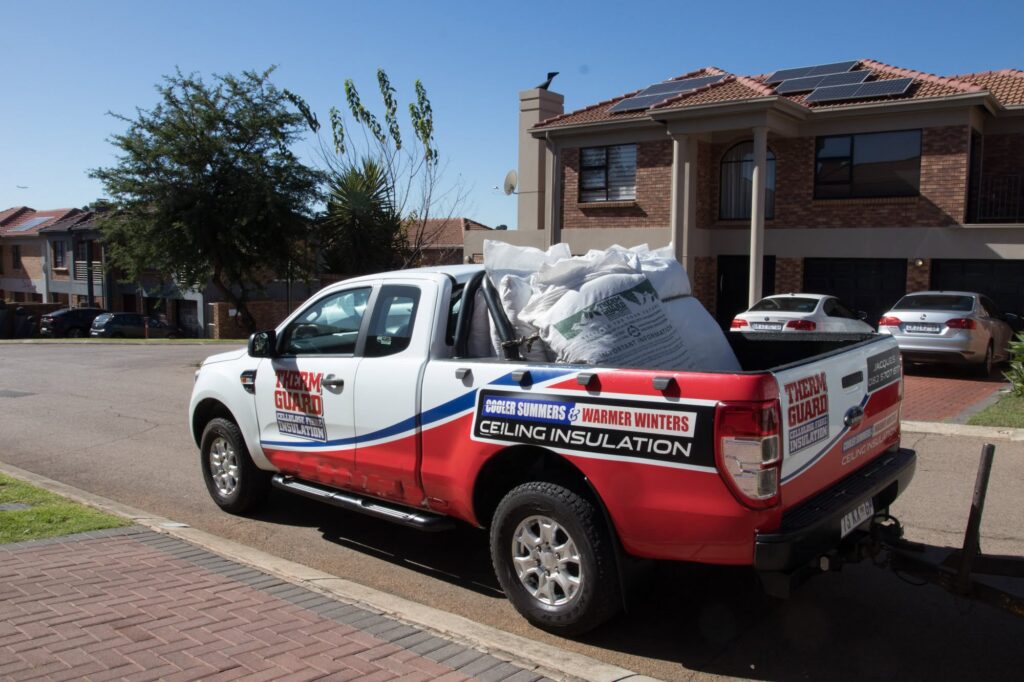
Making homes and businesses comfy since 1984
no gaps, full contact, every corner
Genuine reviews from Therm Guard customers across South Africa.
“Service was exceptional. Willie and his staff are very professional. Already on thr first day we could feel a remarkable difference in our house.”
“Willie Hood was very professional, kind and a pleasure to work with!! He is most considered and kind!! Will do business with him any time again !!”
“Fantastic product and brilliant service. I would highly recommend Willie and his team, My home is now warm and cosy in winter and cool in the summer”
“Willie at Thermaguard is reliable and honest. We are so thrilled with our insulation installation by him. Our home has been so much cooler (at least 8 degrees in summer) and so much warmer in winter.”
“Great experience working with Thermguard Mpumalanga, Willie Hood. Willie was very quick with his quotation end explained the whole process. Arrived on site as promised and completed the job in no time.”
Blown across the ceiling as one continuous layer
Thermguard’s blow-in cellulose ceiling insulation is recycled-paper fibre, treated with fire retardant additives, pumped dry through a hose so it fills every cavity in your ceiling as one continuous blanket with no gaps. It provides an R-value of approximately R2.5 at 100 mm and R3.38 at 135 mm. We install it at the depth required for your South African energy zone and the total R-value of your roof assembly.
The ceiling is the most important surface in any building to get right. It’s the largest single part of the building envelope and the most cost-effective place to insulate. For South Africa, TIPSASA states that roof and ceiling insulation can save up to 45% on heating and cooling energy. That does not mean a 45% reduction in the household’s total electricity bill.
Because it’s pumped rather than cut, cellulose gets into the tight corners, covers over the top of the joists, and leaves no joins for heat to sneak through. We install it to the depth required for your South African energy zone and the total R-value of your complete roof assembly under SANS 10400-XA:2021. Here’s how to determine the correct R-value for your home.
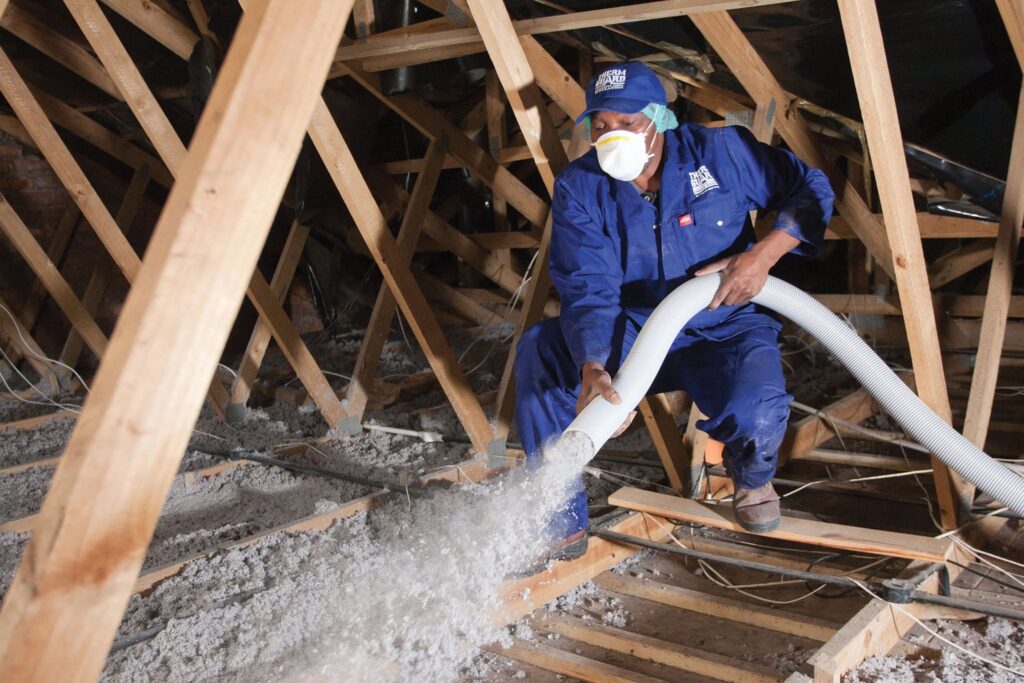
A homeowner in Johannesburg’s western suburbs rang us about exactly that: a roof cavity that climbs past 52°C on a summer afternoon, and bedrooms you can’t sleep in. Here’s what was actually going on up there.
When we got up into the roof, the story was the usual one. There were batts up there, laid years ago by someone in a hurry, but they’d been cut short of the corners, lifted and dumped to one side where an electrician had been back to add downlights, and shoved up in spots where we suspect a bird had been nesting. On a roof like that we’d normally vacuum the old insulation out first. Half the ceiling was doing something; the other half was bare plaster soaking up the heat from a 50-degree roof cavity and radiating it straight down into the bedrooms.
That’s the thing about an R-value on a bag: it only counts if the insulation actually covers the ceiling with no gaps. SANS 10400-XA:2021 requires a total roof-assembly R-value of R3.7 across most South African energy zones, while a typical uninsulated roof-and-ceiling section provides only around R0.30 to R0.35. Using those South African values, leaving just 5% of the ceiling bare can reduce the effective total R-value from R3.7 to approximately R2.36–R2.50 - a loss of around 32%–36%, depending on the roof construction. That’s not a marketing line; it’s what happens when heat bypasses the insulation through uncovered areas.
We pumped Thermguard cellulose over the lot: over the joists, into every corner and safely around the downlights, creating one continuous blanket. The owner messaged us a fortnight later to say the upstairs was finally bearable and the air-conditioner had stopped running flat out. That’s the whole job: no bare patches, fewer thermal weak points and consistent coverage to slow the heat flowing through the ceiling.

Most homes can be measured remotely using aerial mapping and the property’s roof profile, without needing to enter your home first.
To prepare a detailed quotation the cost is calculated after a physical roof-space inspection. The contractor measures the ceiling area and assesses the property’s South African energy zone, roof and ceiling construction, existing insulation, roof access, downlights, electrical services, geysers, water pipes, restricted areas and any signs of moisture or pest contamination.
Your quotation will clearly state the area to be insulated, the proposed Thermguard installation depth and the corresponding insulation R-value, so you know exactly what is being installed and why.
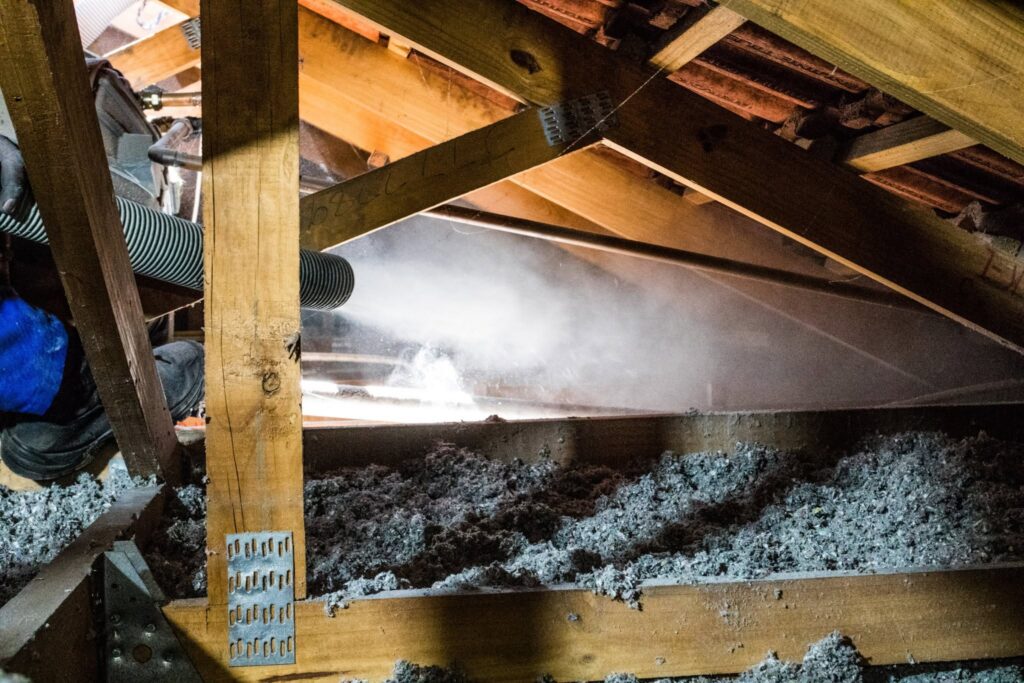
Our specialised blowing rig remains outside and feeds Thermguard through a long hose, so bags of insulation do not need to be carried through your home. The installer enters through the manhole or, where there is no suitable access point, carefully lifts selected roof tiles or sheets.
Before any cellulose fibre is blown in, the contractor identifies and protects the manhole, downlights, electrical equipment, junction boxes, geysers, water pipes and other services. Downlights are isolated or protected according to the fitting manufacturer’s requirements, while access points and equipment requiring future maintenance remain clearly identifiable.
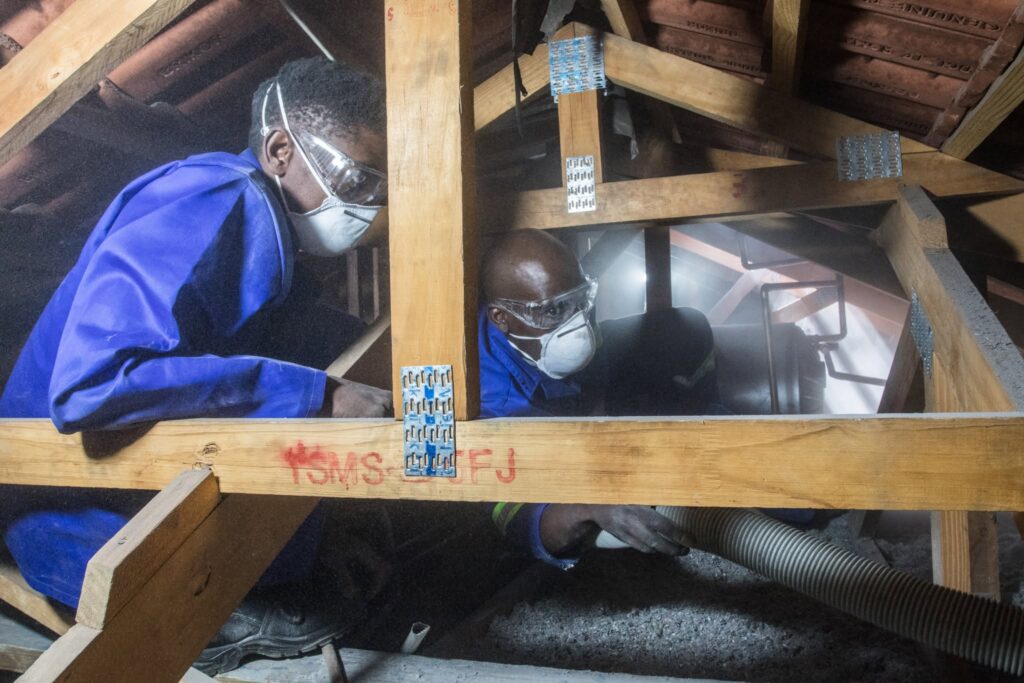
Bags of Thermguard are emptied into a specialist blowing machine, which separates and aerates the cellulose fibres before feeding them through a hose into the roof space. The dry fibres are distributed evenly across the ceiling, settling into tight corners, around trusses and joists, and over awkward areas that are difficult to cover with pre-cut insulation.
Because Thermguard is blown into place, there is no cutting and no joins. It forms one continuous layer across the ceiling, helping reduce the gaps and uncovered areas through which heat can pass.
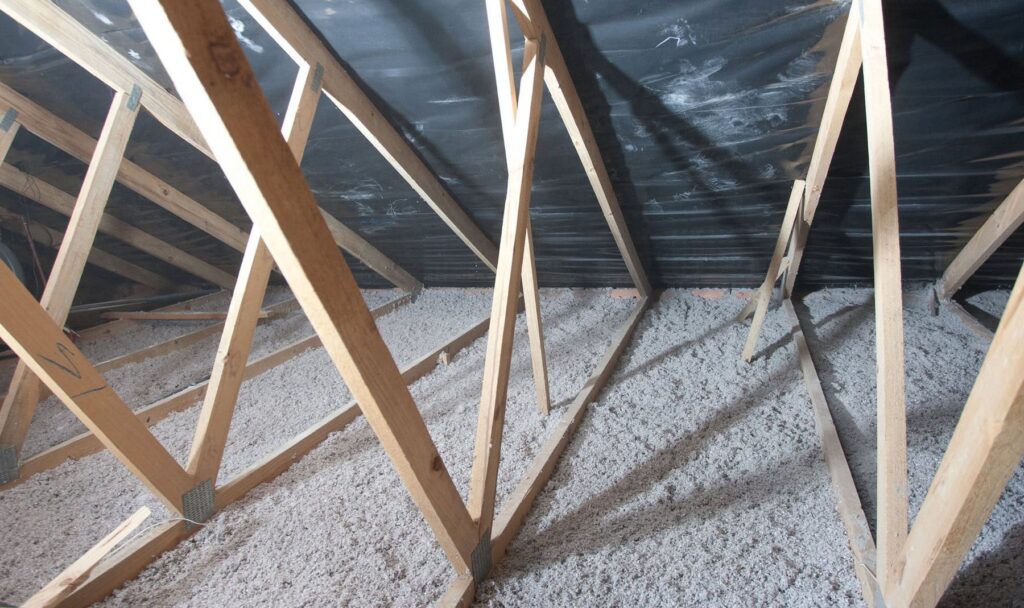
Thermguard is installed to the depth required to achieve the specified settled R-value.
Loose-fill cellulose settles slightly after installation. Thermguard’s thickness and R-value calculations account for this settled density, so normal settling does not undermine the stated performance when the correct amount of product has been installed.
Most homeowners never see the inside of their roof, so the contractor checks the completed installation carefully and photographs the work where practical. This provides a clear record of the insulation inside the roof space.
Before the job is signed off, the contractor confirms that the specified Thermguard depth has been achieved, coverage is consistent, downlights have been treated correctly, access to services remains available, the trapdoor or access hatch has been insulated appropriately and no significant areas have been missed.
We also have a free look around while we're up there and fix the little stuff (a slipped tile, an uncapped pipe) for free, because we don't do roof repairs and there's nothing in it for us either way.
An R-value only performs as specified when the insulation is installed correctly
An R-value is not a marketing opinion. In South Africa, it is the standard measure of how effectively an insulation material or complete building element resists heat flow.
Two products with the same verified R-value offer the same nominal thermal resistance when both are installed correctly. In practice, however, the final performance often comes down to installation quality.
Pre-cut insulation must be carefully measured, cut and fitted around every truss, joist, wire and obstruction. Gaps, compression and uncovered sections allow heat to bypass the insulation and reduce the thermal performance of the complete roof assembly.
Thermguard cellulose fibre roof insulation has no cut edges or joins. It is blown into corners, around obstructions and over ceiling joists before being distributed across the ceiling at a measured depth. This creates a more continuous layer and reduces the risk of gaps in complicated or difficult-to-access roof spaces.
The full-contact coverage also helps reduce cold spots on the ceiling that can contribute to surface condensation and mould. Thermguard’s treatment makes the material unattractive to insects and rodents, while its dense cellulose fibres also help absorb sound.
More Than Thermal Performance
Thermguard also offers:
Thermguard is fire-tested using SANS 10177 Part 5 and Part 10 protocols. It is classified B/B1/2 under SANS 428 and B-s2,d0 under SANS 53501-1.
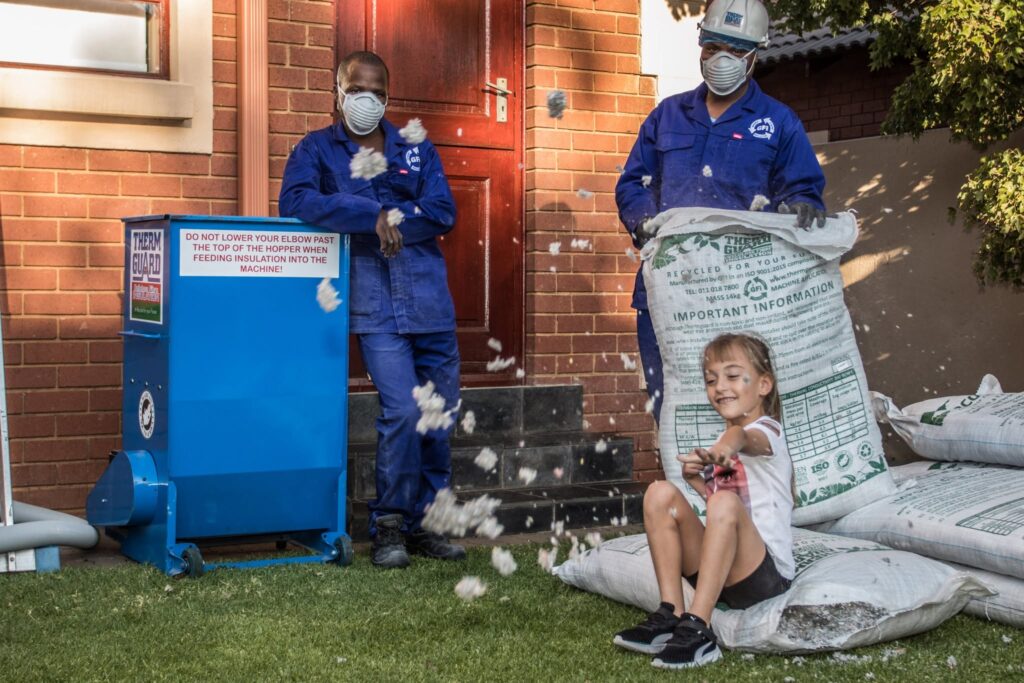
Nothing about installation day should be a surprise. Here’s how a typical Thermguard installation works and the few things that help the job run smoothly.
Vehicle access. Thermguard is installed using specialist blowing equipment positioned outside the home. The cellulose fibre is fed through a hose into the roof space, so the installation team needs suitable access close enough to the house for their vehicle and equipment. If your driveway is narrow, steep or difficult to access, let the contractor know when arranging the installation.
Power. The blowing machine requires access to a suitable electrical supply. Your approved Thermguard contractor will confirm the specific power requirements before the installation date.
Getting into the roof. The installer normally enters through the ceiling trapdoor. Where there is no suitable internal access, selected roof tiles or sheets may be carefully lifted and replaced. Before installation begins, the team identifies and protects the trapdoor, downlights, electrical equipment, geysers and other roof-space services.
Weather. Thermguard is blown into the roof space as a dry product. If wet weather makes roof access unsafe or creates a risk of the insulation getting wet during installation, the contractor may need to reschedule the work.
Installation time. An average home takes approximately three hours, although larger homes, restricted roof spaces, flat roofs and additional work around services may take longer.
Being at home. Access arrangements vary between approved Thermguard contractors. Confirm beforehand whether someone needs to be present to provide access, identify services and inspect the completed work.
Payment. Deposit and payment terms are set by the approved contractor completing the installation. These should be clearly stated in the written quotation before the job begins.
The Thermguard blowing equipment needs to be positioned reasonably close to the house. Move vehicles out of the driveway and clear the route to the ceiling trapdoor or roof-access point so the team can work without moving furniture or other belongings.
The specialist blowing equipment requires access to a suitable electrical supply. Make sure the agreed power points are accessible and let the contractor know beforehand if the property has an older electrical system, limited power points or generator-only power.
Show the installer where any downlights, geysers, solar equipment, junction boxes, alarms or other services are located. Also mention any known roof leaks, electrical concerns or areas that have recently been repaired.
Keep children and pets away from the installation area and remove fragile or valuable items from around the trapdoor. A small amount of temporary dust may be created while the insulation is being blown into the roof space.
Before the team leaves, review the completed work and any installation photographs provided. Confirm that the specified Thermguard depth has been achieved, downlights and services have been treated correctly and the work area has been cleaned.
As a guide, Thermguard ceiling installation costs about R120.00 + VAT depend on the size of your ceiling, the required insulation depth and R-value, the roof type, access, existing insulation, downlights, geysers, electrical services and any difficult or restricted areas.
That is why we inspect the roof space before quoting. A simple single-storey home with easy access will cost less than a large or complex roof with limited access and multiple obstructions.
Your written quotation will clearly state the area to be insulated, the Thermguard depth, the corresponding R-value and any additional work required.
Clear written quotation
No unexpected extras on installation day
Downlights and roof-space services protected
Installation photographs provided where practical
The Thermguard ceiling-insulation questions homeowners ask most
The cost depends on the ceiling area, required insulation depth and R-value, roof construction, access, existing insulation, downlights, electrical services, geysers and any restricted or difficult areas.
As a general rule Thermguard ceiling installation costs about Rxxx to Rxxxx + VAT
Because every roof is different, the contractor physically inspects the roof space before preparing a quotation. The written quote should clearly state the area to be insulated, the proposed Thermguard depth, the corresponding R-value and any additional work required.
Under SANS 10400-XA:2021, the minimum total R-value of the complete roof assembly is generally R3.7 in Energy Zones 1–7 and R2.7 in Zone 5H.
The insulation does not necessarily need to provide the entire R-value because the roof covering, ceiling board, air spaces and other roof components also contribute.
Thermguard provides approximately R2.5 at 100 mm and R3.38 at 135 mm. In a typical roof assembly, approximately 135 mm may be required in Energy Zones 1–7 and approximately 100 mm in Zone 5H. The final depth must be calculated for the actual property.
Thermguard and correctly installed batts can both provide effective thermal resistance. Thermguard’s practical advantage is how it is installed.
It is blown across the ceiling without cut joins and can flow around trusses, wiring, joists and difficult obstructions. This creates more continuous coverage and reduces the risk of gaps, compression and uncovered sections that can compromise the performance of poorly fitted pre-cut insulation.
Not always.
Existing insulation may remain if it is dry, clean, undamaged and does not prevent Thermguard from being installed evenly at the required depth.
Removal may be recommended where the existing insulation is:
The contractor will inspect the roof before recommending removal or a Thermguard top-up.
Thermguard may settle slightly after installation, which is normal for loose-fill cellulose insulation.
Its published thicknesses and R-values are calculated at settled density. When the correct amount of Thermguard is installed, normal settling does not mean that the insulation has failed or lost its designed thermal performance.
Because Thermguard is installed horizontally across the ceiling, it does not sag in the same way that an incorrectly fitted vertical insulation product might.
Thermguard is treated with fire-retardant additives and tested according to South African fire-performance standards.
It is classified B/B1/2 under SANS 428 and B-s2,d0 under SANS 53501-1. The correct description is fire-retardant, rather than completely fireproof or non-combustible.
Downlights and other heat-producing equipment must still be identified and treated correctly during installation.
Yes. Thermguard’s cellulose fibres absorb sound and can help reduce noise passing through the roof space, including traffic, aircraft and rain noise.
Thermguard publishes a Noise Reduction Coefficient of 0.80–0.90 when installed at 100 mm or thicker. The actual improvement will also depend on the ceiling, roof, walls, windows and source of the noise.
Thermguard slows heat transfer through the ceiling, helping the home remain cooler in summer and retain warmth for longer in winter.
This can reduce how often heaters and air-conditioners need to operate. The actual saving depends on the home’s design, windows, draughts, local climate, appliance efficiency and how the occupants use their heating and cooling equipment.
A fixed saving or payback period cannot be guaranteed for every property.
An average home can normally be completed in approximately three hours.
Larger homes, restricted or flat roofs, existing insulation, difficult access and extensive work around downlights, geysers or electrical services may increase the installation time.
This depends on the access arrangements agreed with the contractor.
Someone may need to be present at the beginning of the job to provide access, identify downlights and roof-space services, and discuss any existing concerns. The homeowner should also have the opportunity to review the completed work and any installation photographs before the team leaves.
Thermguard offers a product guarantee, subject to the applicable warranty terms and conditions.
The contractor should provide the written warranty details, including what is covered, the documentation required and any exclusions relating to roof leaks, building alterations, pest damage or later disturbance of the insulation.
Thermguard helps reduce heat transfer through your ceiling, creating a home that is cooler in summer, warmer in winter and less dependent on heating and cooling appliances.
Request a free quotation from Thermguard or one of its approved national installers.
Was this page helpful?
Thanks — that helps us make these pages better.
Our team is ready to help with questions about Thermguard, ceiling insulation, installation or quotations.
Thermguard is South Africa’s original cellulose fibre insulation, helping homes, offices and commercial buildings stay warmer in winter and cooler in summer since 1984.
Made from 80% recycled newsprint, Thermguard is blown into the ceiling to fill gaps and hard-to-reach spaces for consistent thermal coverage. Through our nationwide network of approved contractors, we provide a proven, energy-efficient insulation solution across South Africa.
Telephone
Head Office